
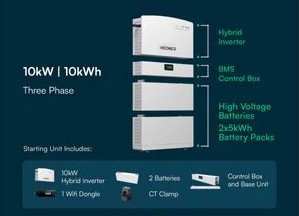
Ten per cent of new cars sold in Australia are now plug-in EVs. Home battery sales are going through the roof. That means a growing number of homes now have both. Or soon will.
And yet, hardly anyone thinks about how the two will work together.
That is a shame. Because if you do not plan it, the default behaviour is simple:
Whenever you charge your car, any charging power required above your instantaneous solar output will come from your home battery1. Most charging is after sunset, and your car battery is much larger than your home battery, so your home battery simply empties into your car.
Your house is left to buy from the grid overnight and some of what you save on petrol, you quietly lose on electricity.
Let’s walk through your choices when adding a home battery to an EV-driving home:
Option 1: Don’t discuss an EV charging strategy with the battery installer
Whenever you plug the EV in, your 7 kW single-phase charger kicks in. Or worse, your (up to) 22 kW three-phase charger.
Your home battery sees a big load, says “righto,” and empties itself into the car. By supper time your battery is flat.
This only makes sense if:
- You have a very big battery. Think 40 kWh or more.
- It has enough power output in kilowatts to run the house and charge the car at the same time.
- Or you drive so little each day that you are only topping up a few kilowatt-hours from a trickle charger.2
Option 2: Ask the installer to wire the EV Charger upstream of the Battery
This is the boring, simple, rational option.
You wire the EV charger so it sits before the battery in the switchboard.
Result:
- The EV can never charge from the home battery.
- It can only charge from the grid or live solar.
Option 3: Get an EV Charger That Talks to Your Battery
When your EV charger and battery inverter talk to each other you can choose whether to charge your car from the battery or the grid.
In reality OCPP between brands is a headache, so the practical answer today is usually to buy the same brand EV charger as your battery.
A Special Word for Tesla Owners
If you have:
- A Tesla car
- A Tesla Powerwall
Everything works beautifully. But there is a catch. Tesla controls charging by sending commands to the car, not the wall charger3. So when you buy a non-Tesla EV later, all that clever integration disappears.
If you plan to have a mixed-brand garage, you may want to think carefully before locking yourself fully into the Tesla ecosystem for both battery and family fleet.
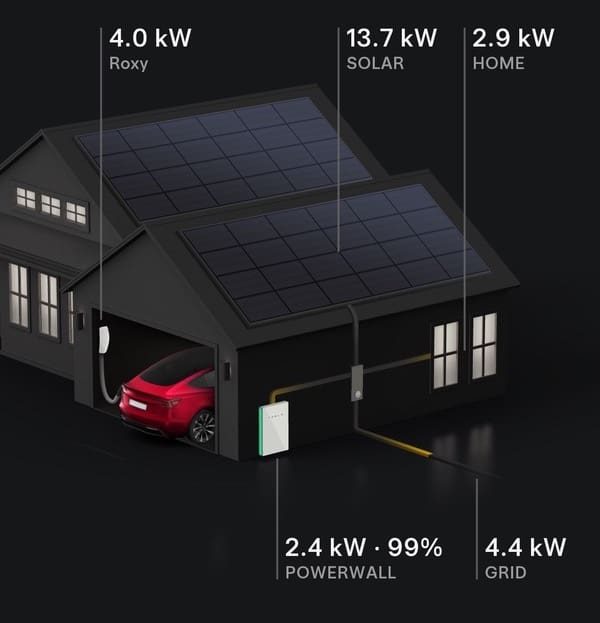
Tesla EVs and home batteries play nicely with each other, but bringing a different brand of car into the mix can cause headaches.
The Bigger Point
EVs and home batteries are both big purchases. Each makes sense on its own. But together, they are a system. If you do not design that system, it will design itself. And it might not work how you want it to.
Before you sign off on your next battery quote, ask one simple question:
“How will this work with my EV?”